Not every requiem wants us to feel the weight of the Last Judgement. Gabriel Fauré’s does something much stranger: it looks at death without raising its voice. Instead of turning it into catastrophe, it imagines it as rest, clarity and, in the composer’s own words, “a happy deliverance”.
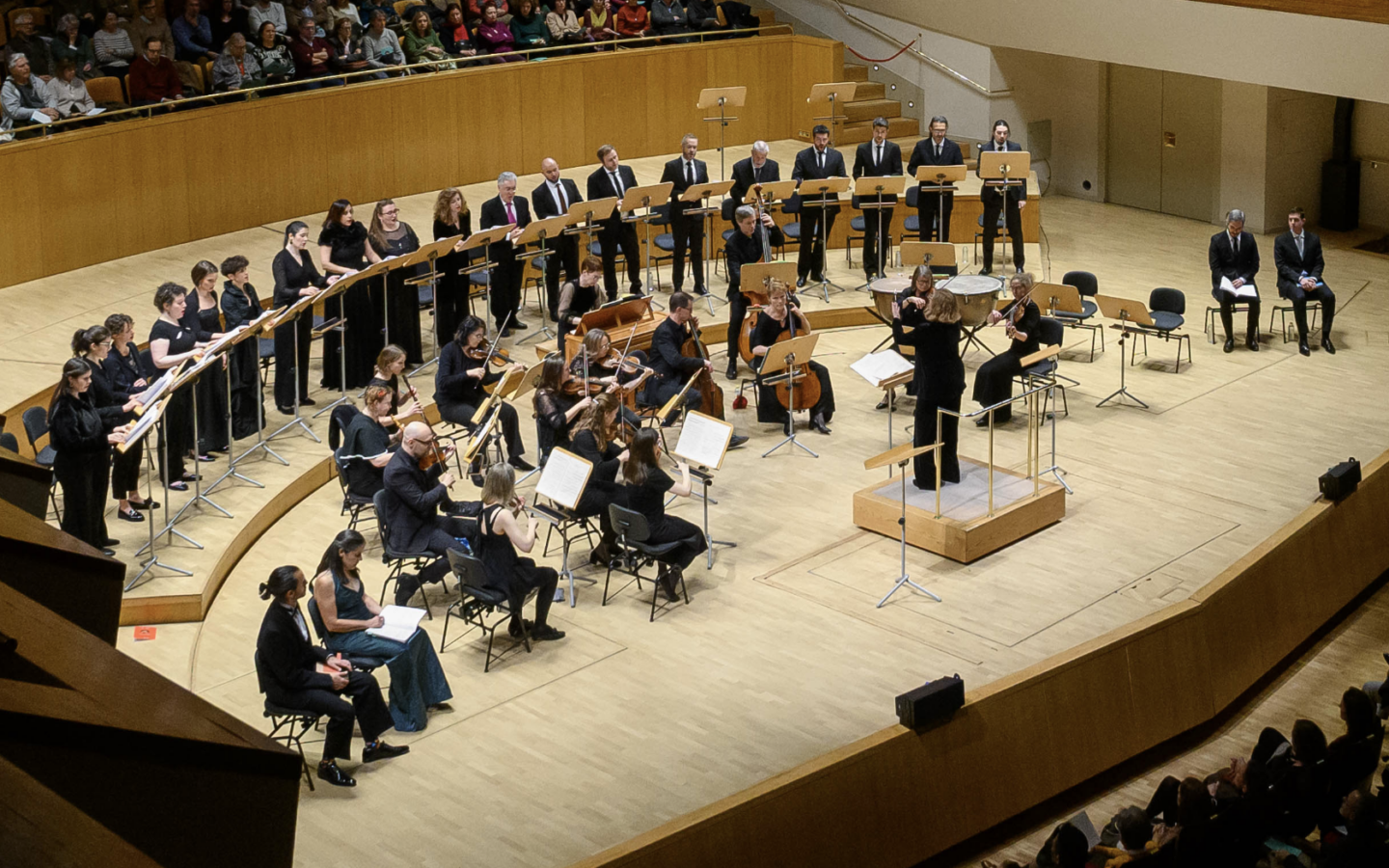
On 17 November, La Filarmónica presents it for the first time in its Madrid season. It will be in the Symphony Hall of the Auditorio Nacional, with Mireia Barrera leading the Orquesta Da Camera and the choir Barcelona Ars Nova. Soprano Núria Rial and baritone José Antonio López complete a cast chosen for a work in which emotion depends not on volume, but on transparency.
A requiem that doesn’t threaten
Fauré began writing the score shortly after the death of his parents, but rejected the drama with which other composers had portrayed the end of life. His music doesn’t seek to frighten or impose solemnity. It moves with an almost domestic serenity: voices that seem to float, restrained instrumental lines and a final In paradisum that sounds more like an open door than a farewell.
The work premiered in 1888 at the Church of the Madeleine in Paris, where Fauré worked as choirmaster and organist. This concert revives the 1893 version for reduced choir and orchestra, closer to the intimate scale in which the score was born than to the great symphonic requiems of Romanticism.
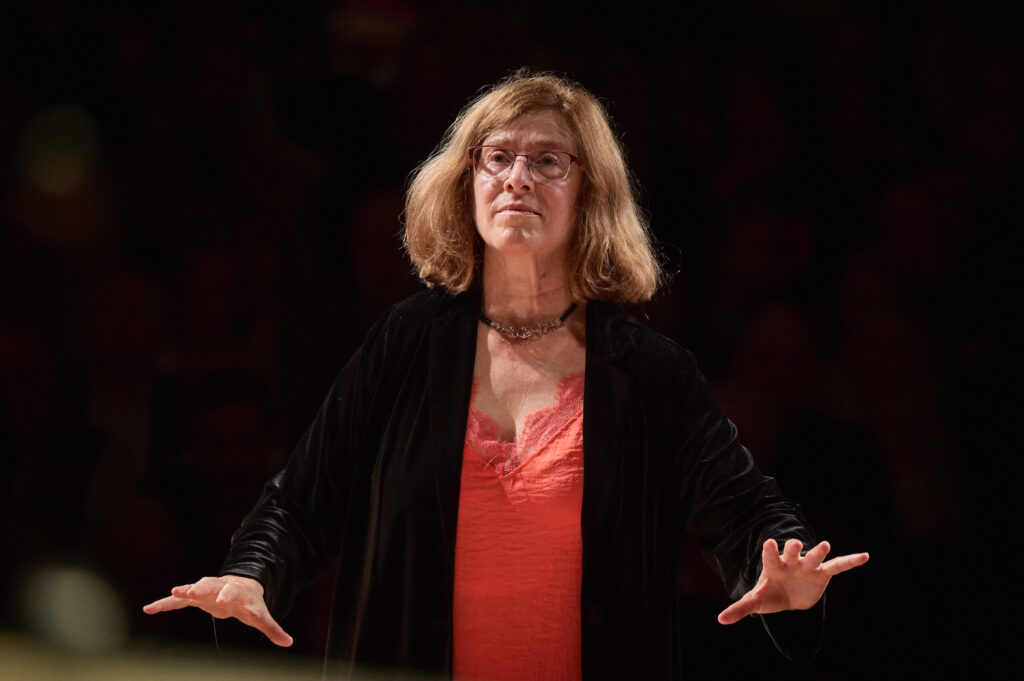
Mireia Barrera’s approach
The heart of the performance lies in the voices. Mireia Barrera knows that territory well: she has worked with conductors such as Valery Gergiev and Teodor Currentzis and has built a career in which the choir is not an anonymous mass, but a group of performers able to breathe and phrase with precision.
For this concert she conducts Barcelona Ars Nova, an ensemble of solo singers who regularly work with groups such as Collegium Vocale Gent, Capella Reial de Catalunya, Pygmalion, Les Arts Florissants and RIAS Kammerchor. That experience matters in a work that demands balance: each voice must keep its identity without breaking the sense of collective calm.
The Orquesta Da Camera, founded in 2013, shares that chamber-music way of understanding music. Its members include musicians linked to the Quartet Casals, Quartet Gerhard, Quartet Cosmos, Trio VibrArt and other European ensembles. It isn’t about shrinking a large orchestra, but working with a more flexible body in which every line can be heard.
The road to Fauré
The programme doesn’t present the Requiem in isolation. The evening opens with Schubert’s Gesang der Geister über den Wassern, a piece on Goethe’s text that compares the human soul to water: it falls, rises, changes shape and begins again. Then comes Samuel Barber’s Agnus Dei, the choral version of his famous Adagio for Strings, music that seems to hold back grief until it no longer can.
Before the main work comes the Cantique de Jean Racine, written by a Fauré of barely nineteen. In a few minutes the harmonic softness, the clarity of the voices and his very personal way of building intensity without making it a spectacle are already there. Hearing it just before the Requiem lets you recognise how a youthful intuition became his own language.
Two voices for the most human moments
Soprano Núria Rial will sing the Pie Jesu, one of the most fragile passages in the score: a clean, almost suspended melody that allows no artifice. Baritone José Antonio López will sing in the Hostias and the Libera me, where the work’s serenity lets a shadow of unease pass before calm returns.
That contrast sums up the requiem’s uniqueness. Fauré doesn’t deny fear, but he doesn’t give it the last word either. His answer is music that accompanies rather than imposes. In a large hall like the Auditorio Nacional, the challenge will be precisely to preserve that closeness.
Practical information
- When: Tuesday 17 November 2026, at 19:30.
- Where: Symphony Hall, Auditorio Nacional de Música.
- Address: Calle del Príncipe de Vergara, 146, Madrid.
- Performers: Orquesta Da Camera, Barcelona Ars Nova choir, Núria Rial, José Antonio López and Mireia Barrera.
- Programme: Schubert, Barber and Fauré.
- Tickets: €40 to €118. The organisers use dynamic pricing, so prices may change depending on availability.
Source and original details: see publication.