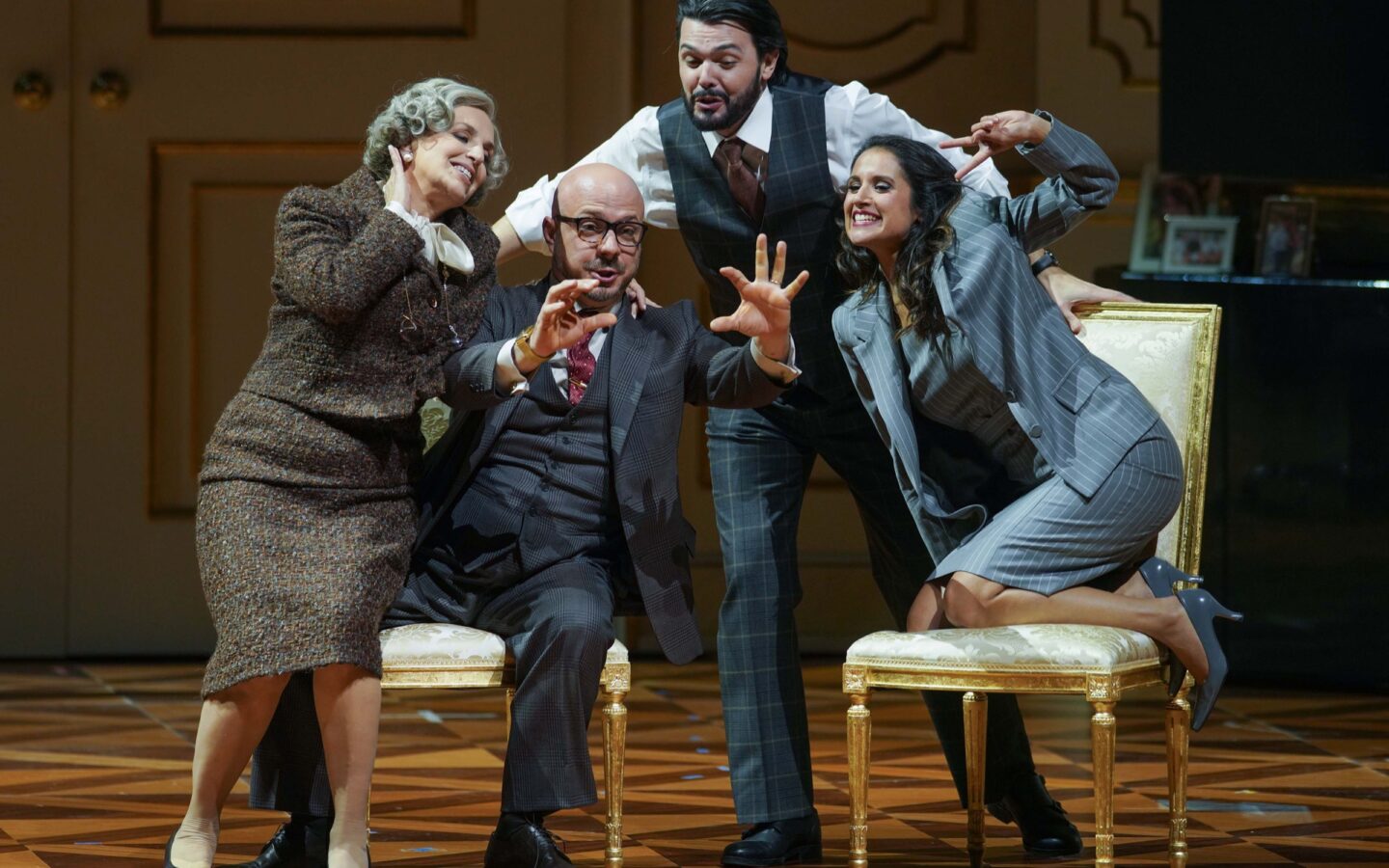
In this palace nobody just works. Weddings are negotiated, limits are tested and doors that should stay closed are opened. The Marriage of Figaro comes to the Teatro Real from 9 to 27 November in a staging that swaps the wig and the 18th-century salon for the corridors of a large government building.
Mozart’s opera keeps its perfect comedy mechanism: Figaro and Susanna want to marry, but Count Almaviva has other plans. From there, a single day fills up with letters, hiding places, disguises, jealousy and unexpected alliances. The fun part is that every tangle reveals something very serious: who gets to decide about other people’s bodies, work and future.
A comedy that understands power all too well
Robert Carsen moves the action to an official palace where public and private mix without asking permission. Offices, assistants and ceremonies turn the count’s house into a political machine: everyone watches, obeys or tries to escape the hierarchy.
The reading works because it doesn’t force Mozart to pretend to be contemporary. The abuse of authority was already in Beaumarchais’s original play and in Lorenzo da Ponte’s libretto. Carsen simply changes the frame so it becomes impossible not to see it.
Why this opera is a good way into Mozart
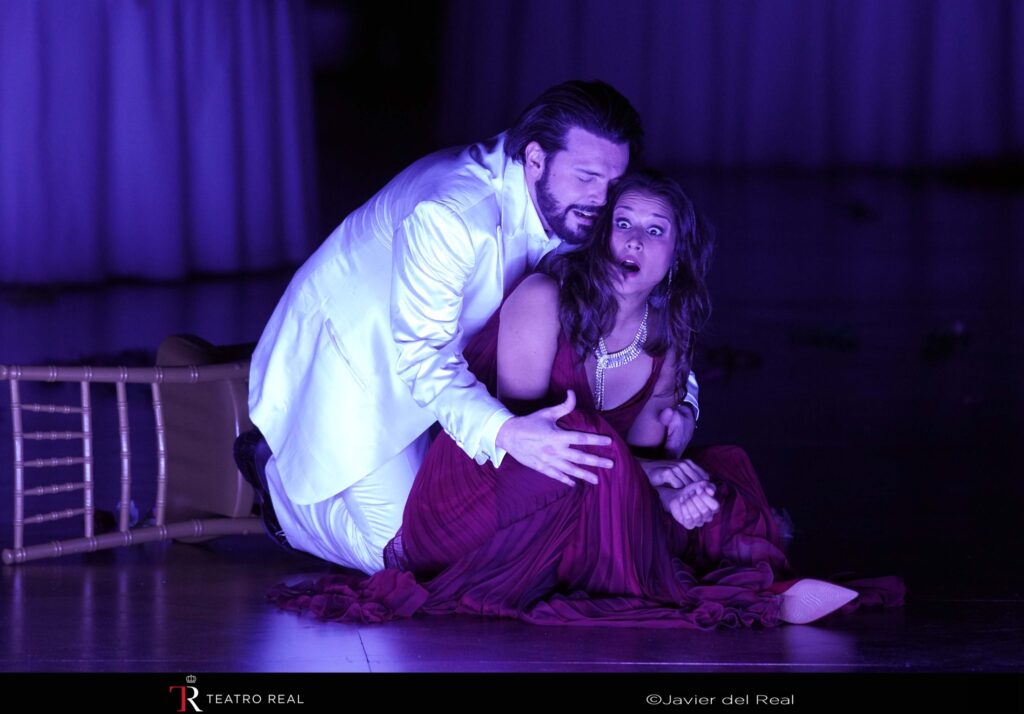
You don’t need to know the story or speak Italian to follow it. The Marriage of Figaro moves like a precision-made series: every character enters at the worst possible moment, every lie lasts just as long as needed and the great ensembles let you hear several truths at once.
Beneath the speed lies extraordinarily human music. Mozart switches from mischief to melancholy in a few bars, gives Susanna and the Countess some of the most delicate moments of the score and saves for the end an idea that is still uncomfortable: the powerful can only regain their place when they ask for forgiveness.
Two casts for thirteen performances
Stefano Montanari makes his debut conducting the Teatro Real’s resident Chorus and Orchestra. The first cast features Mattia Olivieri as the Count, Olga Kulchynska as the Countess, Sara Blanch as Susanna and Luca Micheletti as Figaro. The alternate performances feature Carles Pachon, Elsa Dreisig, Sabina Puértolas and Germán Olvera.
Sets are by Christian Schmidt, costumes by Luís Carvalho and choreography by Rebecca Howell. It is a new Teatro Real production, co-produced with the Metropolitan Opera in New York.
Practical information
- When: 9 to 27 November 2026.
- Times: most performances start at 19:30; on Sundays 15 and 22, at 18:00.
- Where: Main Hall of the Teatro Real, Plaza de Isabel II, Madrid.
- Running time: approximately 3 hours 25 minutes, with a 25-minute interval.
- Price: tickets from €19.
- Language: Italian, with Spanish and English surtitles.
Check the calendar: the performance originally scheduled for 11 November was moved to Monday 9 at 19:30. Check the date before buying.
Fuente y detalles originales: consultar publicación.