Some concerts fit into a single evening and others try to contain the whole world. Gustav Mahler’s Third Symphony belongs to the second category: it begins with a gigantic march, passes through flowers, animals, human beings and angels, and ends with an adagio that seems to move towards the light step by step.
La Filarmónica has chosen this work to open its 15th season in Madrid. It will also be the first time Mahler’s Third has featured in its programme. To make it possible, the Symphony Hall of the Auditorio Nacional will bring together the 102 musicians of the Düsseldorf Symphony Orchestra, 70 members of the ORCAM women’s and children’s choirs, mezzo-soprano Catriona Morison and conductor Ádám Fischer.
A symphony the size of a landscape
Mahler composed the work between 1895 and 1896 and organised it in six movements. His starting point was as ambitious as it was direct: to imagine how nature awakens and rises from matter to love. The composer eventually removed the explanatory titles, but the journey is still clearly perceptible.
The first movement works almost as an independent symphony. Brass, percussion and marches that seem to come from different directions build a primitive, still untamed force. Then the scale changes: the second movement observes the flowers; the third introduces the animal world and a posthorn that sounds like a distant memory.
In the fourth movement the human voice enters. The mezzo-soprano sings a text by Nietzsche and the music becomes nocturnal, suspended. The fifth adds the ORCAM women’s and children’s voices with the famous “Bimm, bamm”, a peal of imaginary bells. And the sixth abandons the outward spectacle to close the work with a long, slow build dedicated to love.
Ádám Fischer returns to his territory
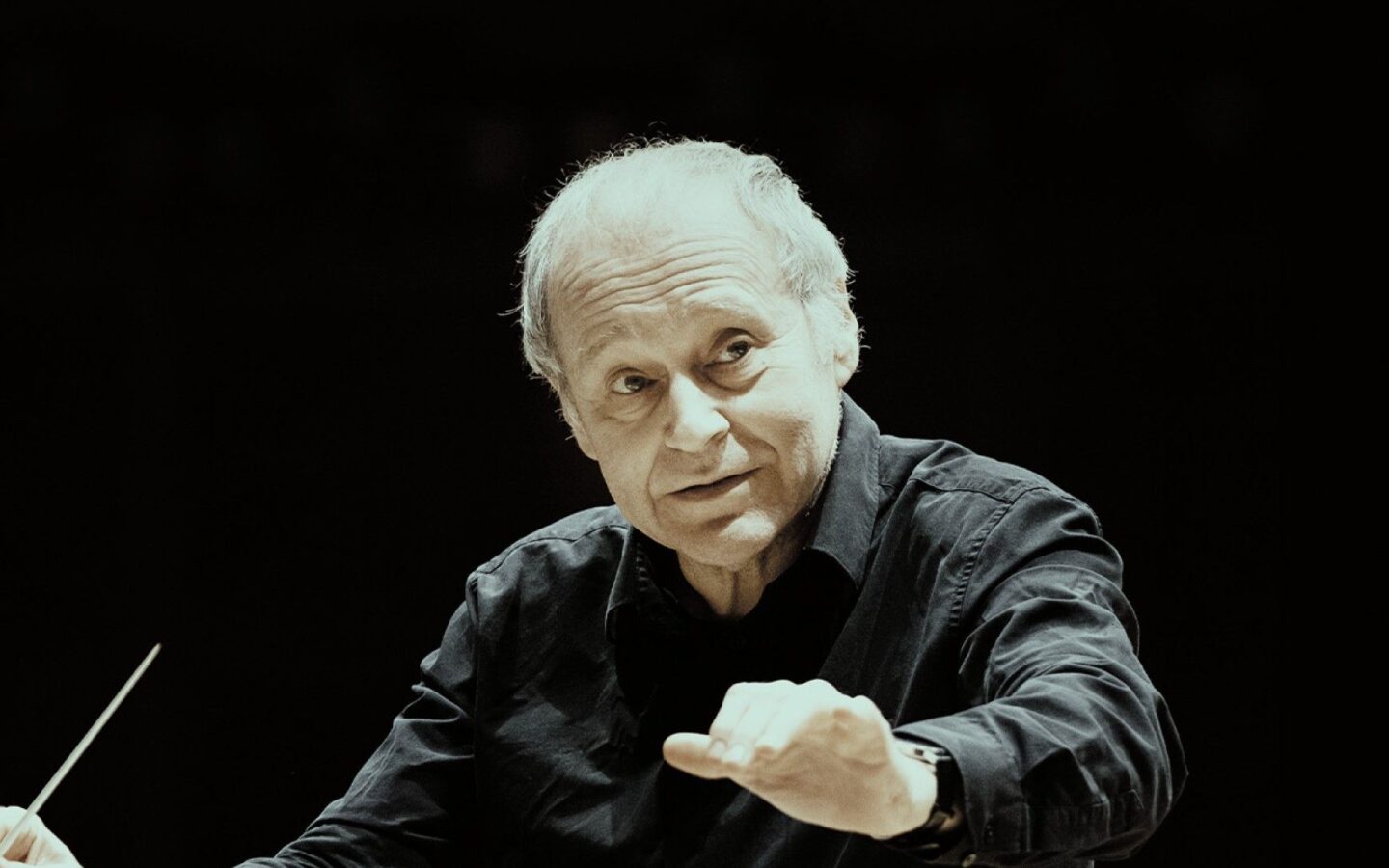
Hungarian conductor Ádám Fischer visits La Filarmónica for the fifth time. His relationship with Mahler is no coincidence: in Madrid he has already given memorable performances of the Fifth and the Ninth, and has made this repertoire one of the central lines of his career.
The Third demands more than holding an orchestra and several choirs together. It needs to organise huge contrasts without losing overall direction: to move from an almost brutal fanfare to a solo that seems to come from outside the hall, to let humour burst in without breaking the tension and to save energy for a finale that grows over many minutes.
On stage will be the Düsseldorf Symphony Orchestra, with which Fischer has a close artistic relationship. The solo voice will be Catriona Morison, a Scottish mezzo-soprano known for a broad repertoire ranging from opera to symphonic concerts.
How to listen if it’s your first Third
You don’t need to study the score before going in. Just accept that the work operates on a different measure of time. The first movement is long and deliberately overflowing; the middle movements are shorter and shift perspective; the last needs calm to have its effect.
It may help to follow three signals: the march in the first part, the distant posthorn in the third movement and the entry of the voices in the fourth and fifth movements. When the final adagio arrives, the symphony leaves characters and images behind and concentrates the whole journey into a single transformation of sound.
A complete performance usually runs close to two hours. It’s precisely that scale, together with the number of musicians and singers it requires, that makes every Mahler Third a rare occasion.
Practical information
- When: Wednesday 21 October 2026, at 19:30.
- Where: Symphony Hall, Auditorio Nacional de Música, Calle del Príncipe de Vergara, 146.
- Programme: Gustav Mahler, Symphony No. 3.
- Performers: Düsseldorf Symphony Orchestra, ORCAM women’s and children’s choirs, Catriona Morison and Ádám Fischer.
- Tickets: 46 to 138 euros depending on the area. Prices include VAT and may vary dynamically depending on demand; booking fees are added at checkout.
- Punctuality: subscription concerts start at 19:30. Arrive early to find your entrance and seat.
Source and original details: see publication.