On Christmas Eve 1874, Tchaikovsky played his First Piano Concerto to Nikolai Rubinstein. He expected advice. What he got was a demolition job: Rubinstein called the score clumsy, unplayable and in need of a complete rewrite. Tchaikovsky’s answer was blunt: he would not change a single note.
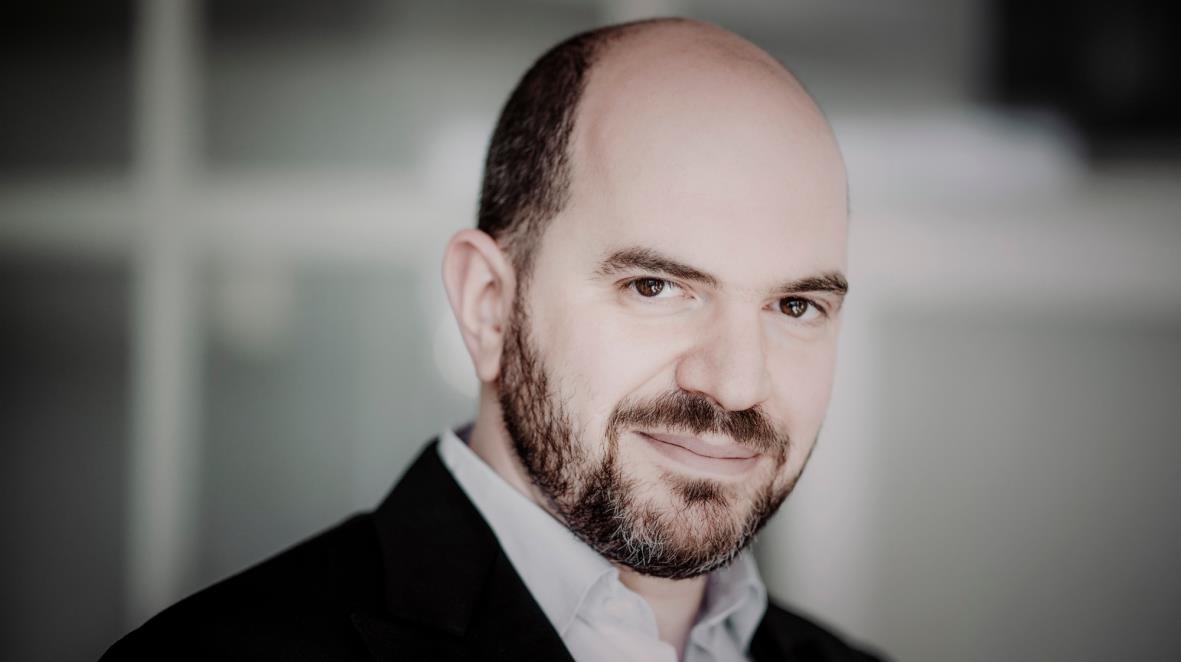
History settled the argument. The concerto born from that bruising private encounter is now one of the most recognisable pieces in the repertoire, from the opening brass call to the pianist’s huge answering chords. On 2 December, Kirill Gerstein plays it at Madrid’s Auditorio Nacional with the Orchestra dell’Accademia Nazionale di Santa Cecilia conducted by Daniel Harding.
The concerto that outlived its first review
Tchaikovsky removed Rubinstein’s name from the dedication and gave the score to Hans von Bülow, who premiered it in Boston in October 1875. It was an immediate success. Rubinstein eventually reversed his opinion and became one of the work’s leading champions — a twist almost as theatrical as the music itself.
Gerstein has lived with this concerto for years, but sheer force is only part of his approach. The Russian-American pianist tends to look behind the grand façade, bringing out its dance rhythms, abrupt changes of character and moments of inwardness that can disappear when the piece is treated as a sequence of big gestures.
After the fireworks, Brahms
The second half changes the temperature completely. Brahms’s Fourth Symphony does not arrive with a fanfare. It begins with a phrase that seems to sigh, returning again and again with a different weight each time. Brahms wrote the work during the summers of 1884 and 1885 in Mürzzuschlag in the Austrian Alps, uncertain about how audiences would receive it.
When he sent the score to Hans von Bülow, he joked that the local climate was so harsh that “the cherries do not ripen”. Brahms conducted the premiere himself with the Meiningen Orchestra in October 1885. The symphony is tightly packed, with no wasted motion; its final movement turns the old form of a chaconne into a farewell of extraordinary tension.
Rome makes its La Filarmónica debut
The Accademia Nazionale di Santa Cecilia orchestra appears in the La Filarmónica season for the first time, led by its music director Daniel Harding. One of Italy’s historic symphonic institutions, it is a natural fit for this pairing: Tchaikovsky needs freedom without losing momentum, while Brahms depends on an architecture that holds firm even at its darkest.
The obvious draw is the First Piano Concerto. Still, do not mentally leave the hall after its final burst of virtuosity. Brahms’s Fourth, less instantly familiar, may well be the piece that stays with you the longest.
Practical information
- When: Wednesday 2 December 2026 at 19:30.
- Where: Sala Sinfónica, Auditorio Nacional de Música.
- Address: Calle del Príncipe de Vergara, 146, Madrid.
- Performers: Kirill Gerstein, Orchestra dell’Accademia Nazionale di Santa Cecilia and Daniel Harding.
- Programme: Tchaikovsky’s Piano Concerto No. 1 and Brahms’s Symphony No. 4.
- Tickets: €60–€208. Dynamic pricing applies, so prices may change as the hall fills.
Source and original details: see publication.