For a long time the tapestry was treated as an elegant background: something there to warm a wall, improve the acoustics or remind you of the power of whoever could commission it. This autumn, Madrid proposes exactly the opposite. Three exhibitions make you look the weave in the face and recognise that textiles can be painting, architecture, political memory and sculpture too.
The route can be spread over several days. Start with the Banco de España collection, continue with five centuries of textile art at the Fundación María Cristina Masaveu Peterson and finish in Baroque Madrid at the Fernán Gómez. For those who want to see how all this is made, the Royal Tapestry Factory is the perfect epilogue.
1. El plano flexible: when a fabric changes a space
The Banco de España gallery brings together about fifty pieces from the 17th to the 21st century. There are tapestries, rugs, painting, photography, video, documents and coins, but the real common thread is the textile’s ability to organise a room, absorb sound and show who holds power.
Among the historical pieces, the Brussels series The Months stands out, made around 1679 by Gerard Peemans’s workshop from designs by David Teniers III. The exhibition doesn’t leave it locked in the past: it sets it against contemporary works about labour, value, memory and the circulation of money.
The piece that best sums up that conversation is Manos que dan, manos que reciben by Dora García: six tapestries conceived for the Salón de Cobradores. The work alludes to the market’s “invisible hand” and, at the same time, performs a very concrete physical task by improving the room’s acoustics.
- Dates: until 28 March 2027.
- Where: Sala Banco de España, Calle de Alcalá, 48.
- Opening hours: Tuesday to Saturday, 11:00–14:00 and 16:00–20:00; Sundays in December, same hours.
- Entry: free with advance booking.
2. Colecciones Masaveu: five centuries and a wall that stops being a limit
The Fundación María Cristina Masaveu Peterson displays more than eighty pieces from the 15th century to today. The route begins with rugs, embroidery and tapestries from the old European workshops: biblical scenes, mythology, landscapes and images designed to create depth long before screens existed.
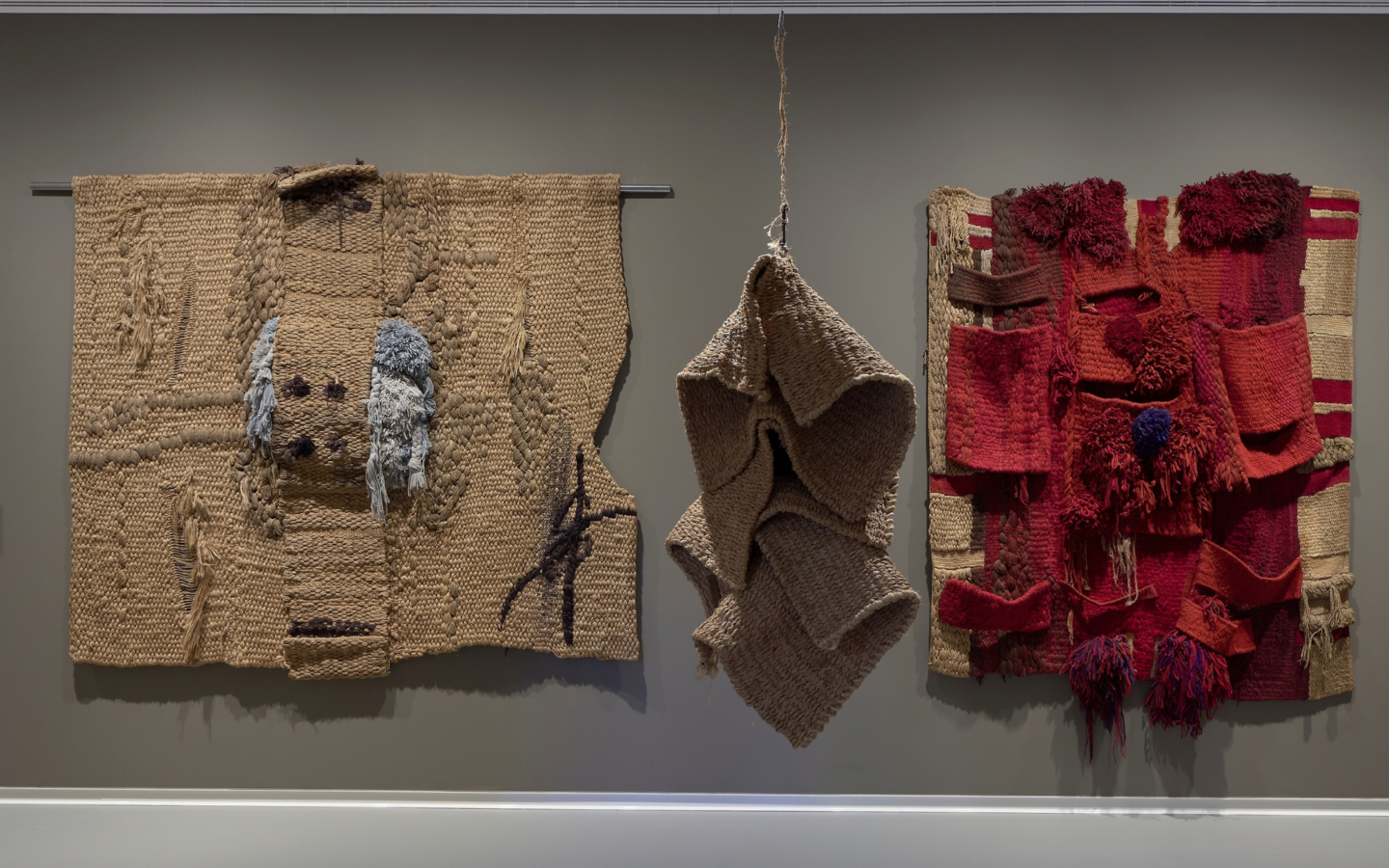
Then something interesting happens: the fabric comes away from the wall. In the contemporary section, fibre occupies space and becomes volume. Magdalena Abakanowicz, Sheila Hicks, Sonia Delaunay, Joan Miró, Josep Grau-Garriga and Aurèlia Muñoz help you understand that modern textile art isn’t a footnote to painting, but a language of its own.
It’s an especially rewarding exhibition for anyone who enjoys looking at materials. Get close to the embroidery, look at the back of the weaves and compare how the same technique can depict a courtly scene or build an abstract form.
- Dates: until 18 July 2027.
- Where: Centro FMCMP Madrid, Calle de Alcalá Galiano, 6.
- Opening hours: Tuesday to Friday, 11:00–20:00; Saturday, 10:00–20:00; Sundays and public holidays, 10:00–15:00.
- Entry: free with a timed pass. Bookings open fifteen days in advance and there may also be places at the door.
3. Teatro de grandeza: Madrid as a Baroque stage
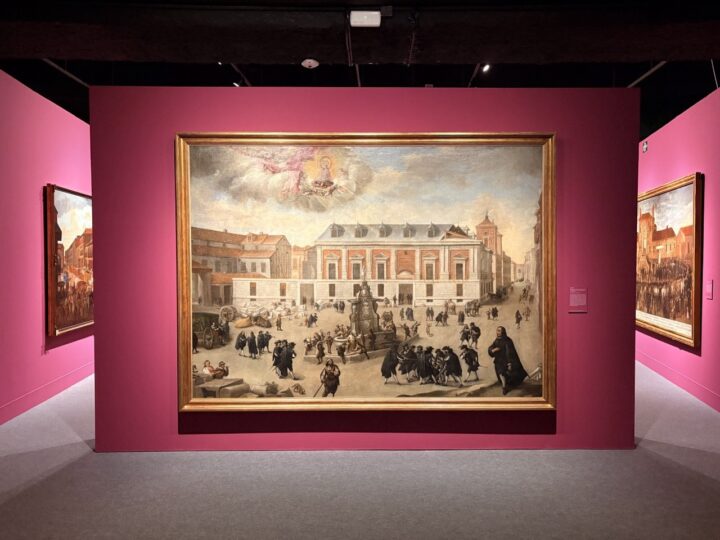
At the Fernán Gómez. Centro Cultural de la Villa, textiles are part of a broader story: how Madrid became a court capital and used art, architecture and public festivities to display its grandeur.
The exhibition brings together more than 180 works from Spanish and international institutions. There are paintings, sculptures, maps, engravings, architectural drawings and historic views. One of its great attractions is the chance to see all twenty sheets of Pedro Teixeira’s map together, a meticulous image of Madrid in 1656 that lets you trace streets, convents and vanished buildings.
It isn’t a show about “Baroque decoration”. It is a visual explanation of how the city became a theatre: squares acted as stages, balconies as boxes and every public celebration as a choreography of power.
- Dates: 20 October 2026 to 17 January 2027.
- Where: Fernán Gómez. Centro Cultural de la Villa, Plaza de Colón, 4.
- Opening hours: Tuesday to Sunday, 10:00–20:00; closed Mondays.
- Tickets: check current prices before you go. “Baroque Tuesdays” let you visit the exhibition for free.
Bonus: step inside the Royal Tapestry Factory
After seeing the result, one question is inevitable: how is it made? The answer is at the Royal Tapestry Factory, active since 1721. Its guided tours go through the workshops and let you see looms, restoration processes and the work of the master weavers.
The factory is at Calle de Fuenterrabía, 2, near Atocha. The museum opens Monday to Friday and access is by guided tour, so check times, languages, availability and current prices before you go.
Fuente y detalles originales: consultar publicación.