
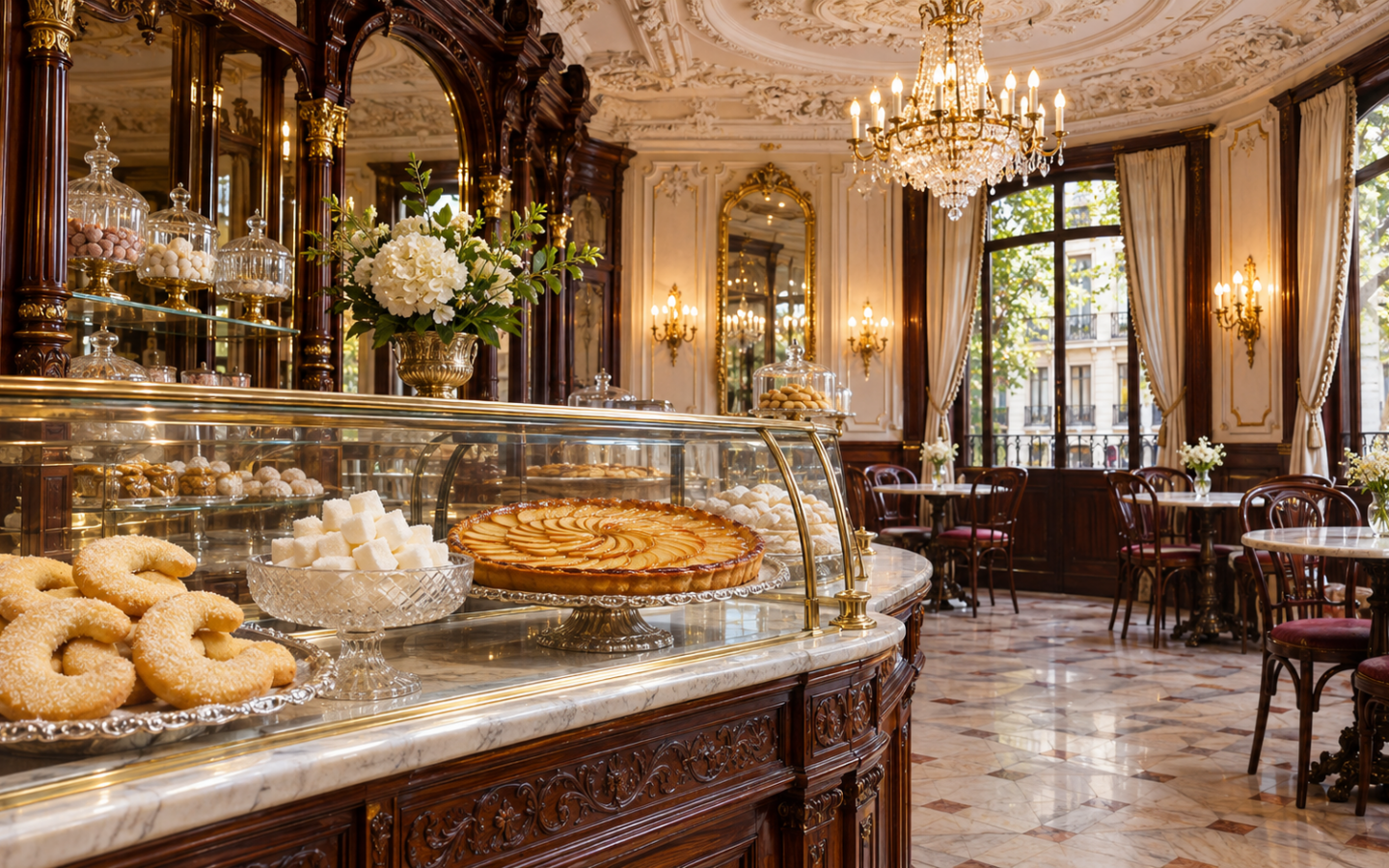
A few steps from Puerta del Sol there’s a pastry shop where time hasn’t stopped, but has learned to move slowly. El Riojano has been open since 1855 and preserves much of the decoration that turned a confectioner’s on Calle Mayor into a small, palatial salon.
People come here for the pastas, the bartolillos or the apple tart. But before ordering, look around: Cuban mahogany, bronzes, Carrara marble, Isabelline lamps and stuccoed ceilings. In a city that changes its shop windows quickly, El Riojano still looks a lot like itself.
A confectioner’s born close to the court
The shop was founded by Dámaso de la Maza, pastry chef to the Royal Household and a native of La Rioja. His origin explains the nickname he was known by —El Riojano— and the name that ended up over the door.
The relationship with the court wasn’t limited to the clientele. The counters and display cases were made by palace cabinetmakers with mahogany from Cuba, bronzes and fine marble. The current look was consolidated in an 1892 renovation, and pieces from the old business are still preserved, such as the disused wood-fired oven, a cash register and historic scales.
At the back is the tea room, the right place to stop and understand that this isn’t just a shop to pass through. The ceiling ornamentation, the lamps and the period wall lights make a coffee and cake feel like a visit to a historic business that’s still alive.
Pastas del Consejo: a C with history
The house’s most recognisable sweet is small, dry, aromatic and shaped like the letter C. These are the pastas del Consejo, lemon biscuits associated for generations with the meetings of the Council of State.
The story passed down by the shop says Queen Maria Christina asked for a firm biscuit for the young Alfonso XIII: it had to keep him occupied during those long sessions without filling the halls with crumbs. Dámaso de la Maza adapted a recipe and gave it the C shape for “Consejo”. Beyond the courtly anecdote, it became one of El Riojano’s most Madrid specialities.
It isn’t an extravagant biscuit or a dessert designed for photos. That’s precisely why it’s worth it: lemon, a firm texture and a recipe that speaks of an era when pastry-making also solved problems of protocol.
Azucarillos: the soft drink of old Madrid
Another curious item in its display cases is the azucarillos. They aren’t simple sugar cubes: they’re made with a porous texture and are part of the memory of Madrid’s street fairs.
In the late 19th century they were dissolved in cool water and, for adults, finished with a dash of aguardiente. The custom was so popular that it gave its name to Federico Chueca’s zarzuela Agua, azucarillos y aguardiente. Buying one today means taking home an edible fragment of that city of water sellers, summer strolls and street stalls.
What to order at El Riojano
The pastas del Consejo are the essential choice for a first visit. After that, the best strategy is to combine a permanent classic with the workshop’s traditional calendar.
- Apple tart: thin, crisp and without needless decoration. Our choice to eat in the salon.
- Bartolillos: one of the most traditional Madrid treats, with fried pastry and custard.
- Azucarillos: more a gastronomic memory than a conventional dessert.
- Tea biscuits: an easy option to take away or give as a gift.
- Seasonal sweets: torrijas, San Isidro rosquillas, huesos de santo and buñuelos, Corona de la Almudena, turrón and roscón when their time comes.
Availability changes with the time of year. That calendar is part of the charm: not everything has to be in the display case at all times for a pastry shop to be interesting.
Practical information
- Address: Calle Mayor, 10, Madrid.
- Area: between Puerta del Sol and Plaza Mayor.
- Published hours: every day, 9:00 to 21:00.
- What you’ll find: shop, traditional workshop and tea room.
- Orders: in-store collection and delivery in Madrid through its website.