
Some shows begin when the lights go down. WAH begins well before: among bars, open kitchens, performers who appear where you don’t expect them and tables still deciding what to order. When it’s finally time to go into the theatre, the night has already been happening for an hour.
MadGo experienced it from start to finish and that’s the first surprise: WAH doesn’t try to be a musical, a themed dinner or a nightclub with live acts. It takes a bit of each format and organises it as an experience of around five hours divided into three acts. It may sound excessive. In practice, its best trick is changing scale and energy before the audience gets too comfortable.
Act I: dinner while the show has already begun
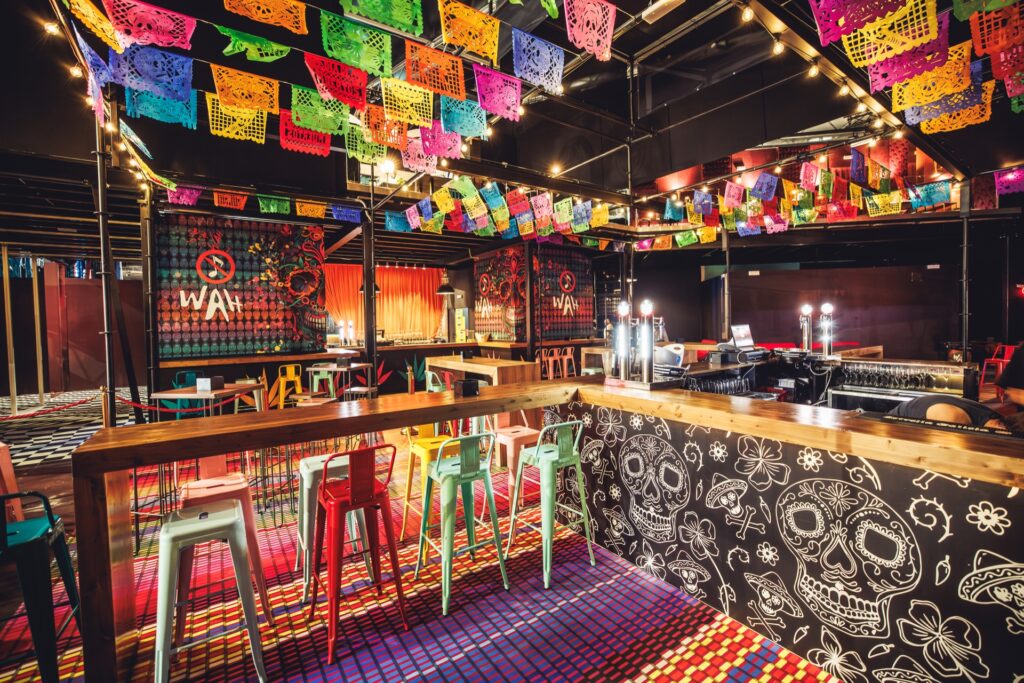
The Food Hall works as a prologue and a statement of intent. There’s no quiet dining room waiting for the show: there are stalls inspired by different world cuisines, music, first performances and set design that encourages you to explore the space. The experience makes more sense if you arrive early, walk all the way round and only then choose what to eat.
The food travels through Mediterranean, Mexican, American and Asian flavours. Know this before booking: food is not included in the general ticket, except in specific packages. Rather than finding out at the bar, it’s better to set a budget for dinner and drinks from the start. There are also options adaptable to vegetarian and vegan diets and various intolerances; if you have a serious allergy, the official recommendation is to let them know before buying.
Act II: a musical machine that ignores borders
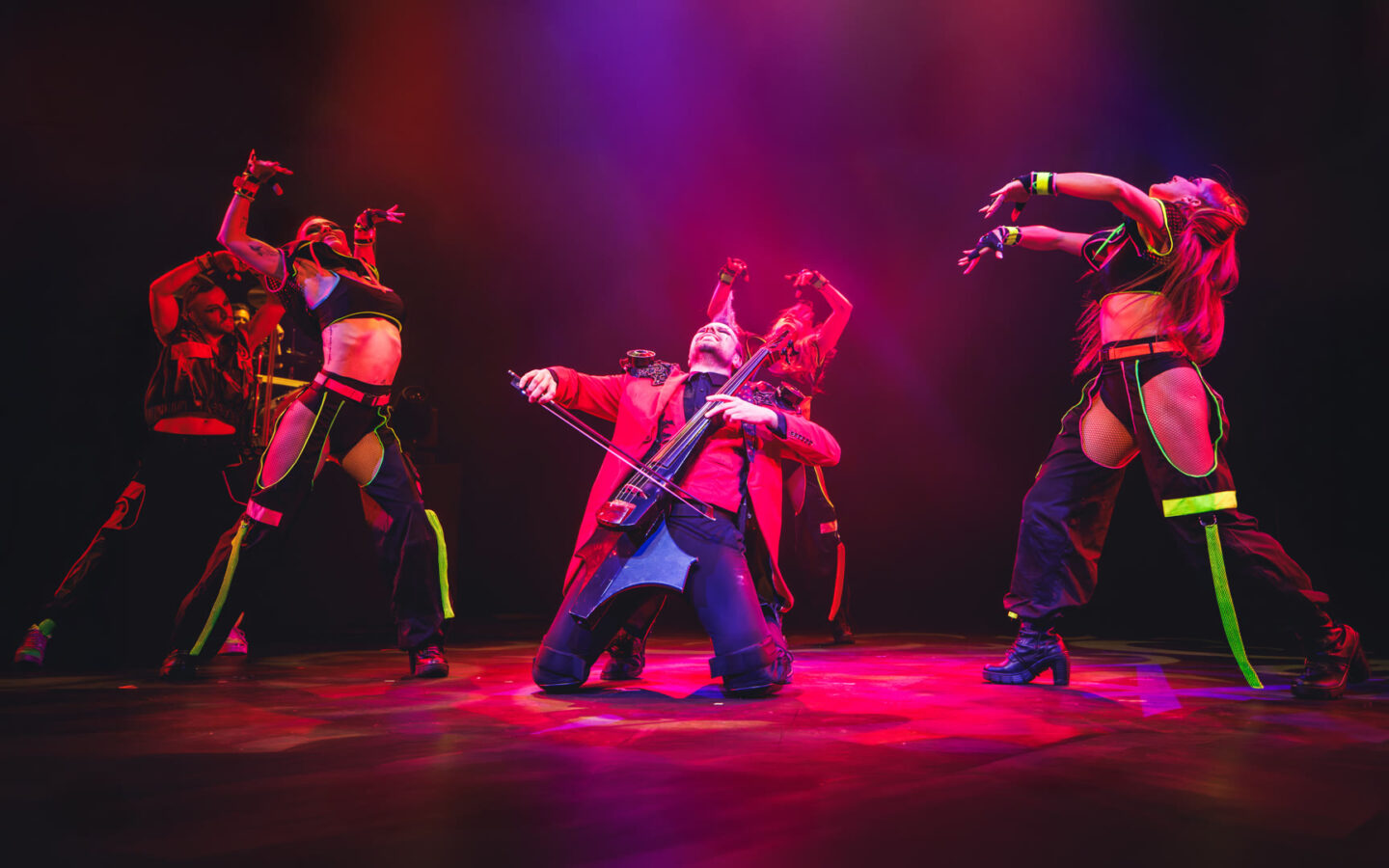
Then comes the heart of the night. More than 40 artists —singers, dancers and musicians— move through big songs and recognisable genres without turning the show into a simple catalogue of hits. The interest isn’t just guessing the next track, but seeing how it changes shape: a song can start with the solemnity of a concert, break into choreography and end up as a large-scale image.
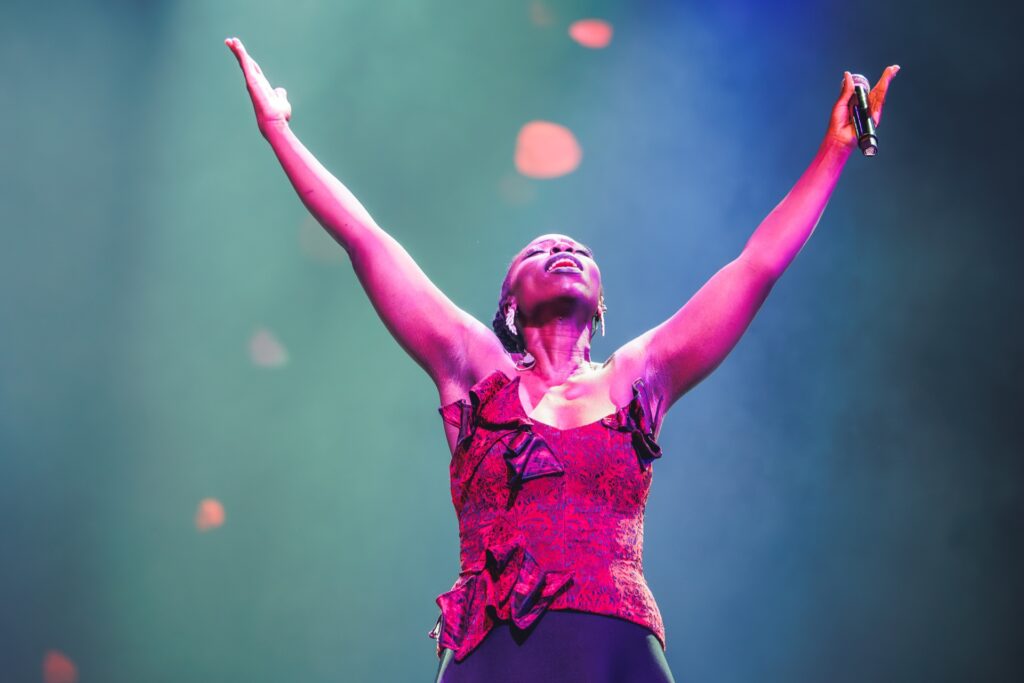
WAH works with the language of big entertainment: screens, precision lighting, costume changes and a stage that seeks stimulus in every direction. But the moments that best withstand the spectacle are the most human ones. A voice held without tricks, an instrumentalist taking centre stage or the brief silence before the whole room comes back into the song. The production impresses; the live talent is what stops it becoming a string of effects.
Which seat to choose?
There’s no universal answer. The Panoramic Stand offers individual seats and a fuller view of the stage. Tables bring the audience closer to the action and add waiter service during the show. The Live Table, VIP and box options increase proximity, services and, in some cases, the food component.
Our advice is not to buy purely by price hierarchy. If you like watching the whole choreography, a panoramic position may be more satisfying than being right by the floor. If you want a celebration and to feel the movement around you, a nearby table makes more sense. On the official sales platform, prices vary by date and availability; for the upcoming sessions we checked they start at around 44 euros.
Act III: the applause isn’t the goodbye
In a conventional theatre, the last number signals the exit. Here it opens another door. La Catedral turns the ending into an aftershow with a DJ, performances, cocktails and room to stay. It’s the part that completes WAH’s idea: not taking the whole audience along the same emotional journey and then suddenly sending it back onto the street, but letting each person decide when their night ends.
It’s also when you understand why the evening session doesn’t work the same for everyone. The show is suitable for different ages, but minors must leave the venue at 23:15 and cannot stay for the aftershow. For families, the Saturday matinee is a much more natural choice.
The best bits and what to know
WAH’s greatest strength is producing a complete night without making you change direction three times. You can have dinner, see a big show and end up dancing in the same space. The pace is designed for groups and celebrations, but it also works for those who come for the music: there’s enough craft on stage to sustain the show beyond the party.
The flip side is just as clear. It’s around five hours, food is usually paid separately and the setting is deliberately intense. If you’re looking for a short, intimate, quiet show, this isn’t that plan. If you accept the excess and arrive willing to move between formats, the experience has a personality hard to confuse with any other show in Madrid.
Practical information
- Where: Espacio WAH, Avenida del Partenón, 5, IFEMA Madrid.
- Getting there: Metro line 8, Feria de Madrid station; also buses 73, 112 and 122.
- Times: evening sessions at 19:30; Saturday matinee at 13:30. Check the calendar before buying.
- Duration: around five hours across the Food Hall, theatre and La Catedral.
- Price: varies by date and seat; sessions we checked start at around €44.
- Food: not included in the general ticket, except specific packages.
- Arrival: it’s worth being there about fifteen minutes before doors open to enjoy the first act without rushing.
- Accessibility: there are adapted seats and routes for people with reduced mobility.
MadGo attended a performance of the sixth season to write this article. Images were provided for editorial use by WAH Show.