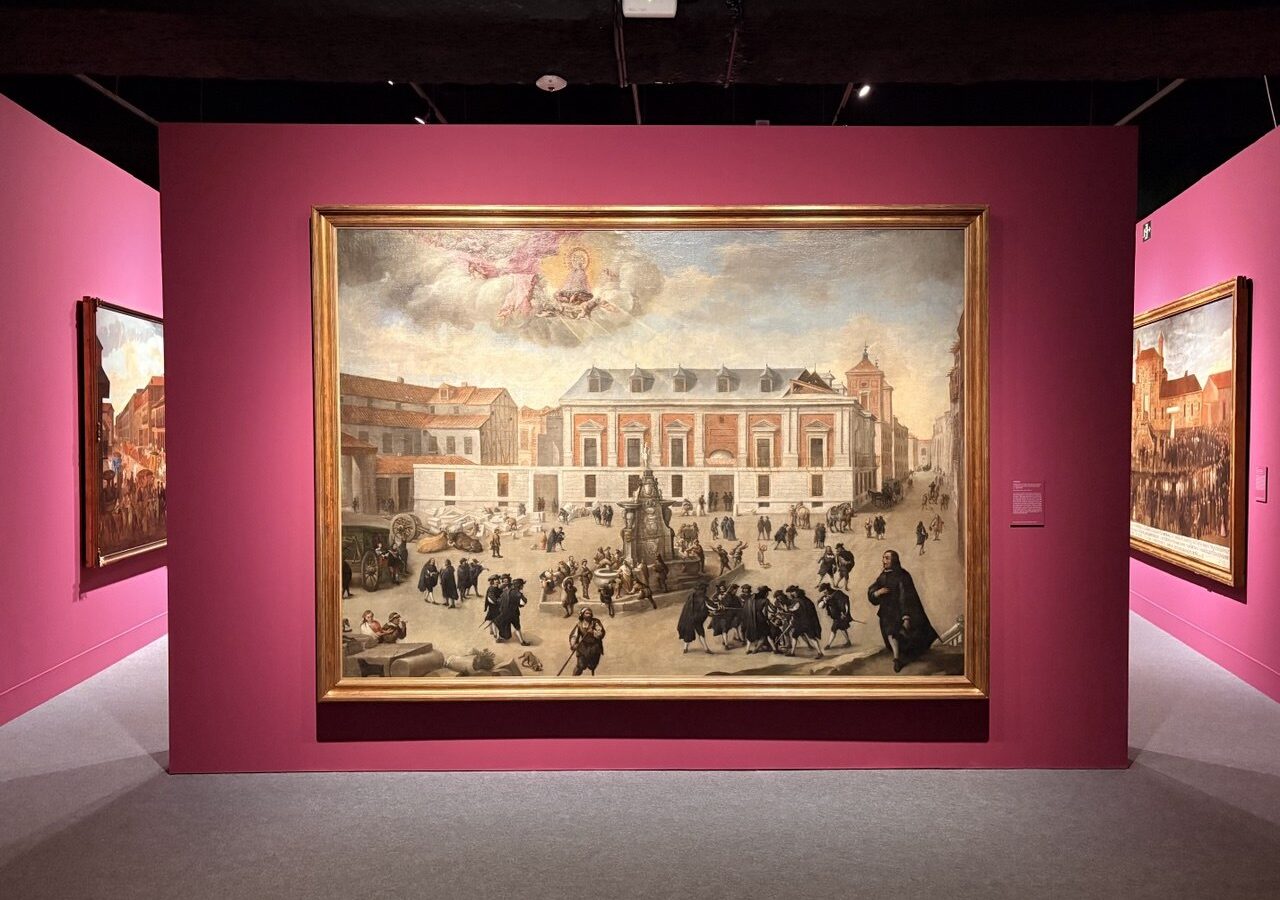
Before Gran Vía, shop windows and traffic, Madrid already knew how to become a spectacle. Royal entries, processions, festivities, balconies and squares made up a great urban stage set. The exhibition Teatro de grandeza. Arte, arquitectura y ciudad en el Madrid barroco (Theatre of Grandeur) reconstructs that world with more than 180 works gathered at the Fernán Gómez.
It isn’t a parade of solemn objects. The route explains how a capital lived that had to represent the power of the monarchy while also making room for merchants, craftsmen, servants, travellers and residents who filled its streets. The city appears as both stage and protagonist.
A Velázquez, a woven Rubens and a sculpture marked by fire
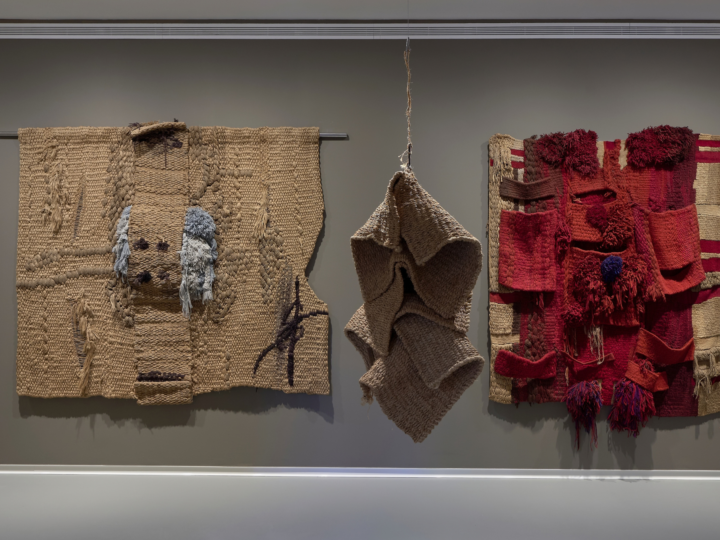
Among the most recognisable pieces is a portrait of Philip IV painted by Diego Velázquez. Nearby, a monumental tapestry almost five by five metres translates into fabric a composition linked to Rubens: a work designed to impress through colour, scale and the material cost of every centimetre.
There is also an extraordinary witness from the old Alcázar: a plaster sculpture commissioned by Velázquez during his trip to Italy. The piece survived the fire that destroyed the palace in 1734 and still bears marks of that disaster. It’s one of those objects that works as a document even before you read its label.
Find your street in the Madrid of 1656
One of the exhibition’s centres of gravity is Pedro Teixeira’s Topographia de la Villa de Madrid. Its twenty sheets are shown together, letting you patiently explore the rooftops, convents, gates, gardens and streets of the city as depicted in 1656.
The inevitable game is getting your bearings: finding Plaza Mayor, following the layout we still recognise and discovering how much of Madrid disappeared before photography existed. The map is not just a map. It is a portrait of the capital and a demonstration of how it wanted to be seen.
How people lived and celebrated
Paintings, drawings, engravings and city views show life beyond the court. Markets, amusements, ceremonies and everyday scenes appear. Even the Manzanares, which today can seem a quiet boundary, is revealed as a place for bathing, meeting and leisure in summer.
The exhibition also looks at ephemeral architecture: decorations, arches, catafalques and stages built to last just a few days, but capable of transforming the entire city. In the Baroque, a public festival was a form of political communication; Madrid learned to speak through façades, fabrics, music and crowds.
A visit to take slowly
The works come from dozens of Spanish and international institutions, including the Prado Museum, the National Library, Patrimonio Nacional, the Real Academia de Bellas Artes de San Fernando and the Vatican Museums. The variety is part of the appeal, but it also demands time.
If you don’t want to end up overwhelmed, organise the visit around three points: Teixeira’s great map, the works related to Philip IV’s court and the scenes of urban life. Then go back to the pieces that surprised you most. Two hours let you see the exhibition without turning it into a race.
Practical information
- Dates: 20 October 2026 to 17 January 2027.
- Where: Fernán Gómez. Centro Cultural de la Villa, Plaza de Colón, 4.
- Opening hours: Tuesday to Sunday, 10:00 to 20:00; closed Mondays.
- Price: 6 euros at the box office or 6.50 euros online.
- Tuesdays: free entry with a ticket, available on the centre’s website.
- Special days: closed on 24, 25 and 31 December and 1 January; on 5 January it opens from 10:00 to 15:00.
Fuente y detalles originales: consultar publicación.